Why I Oppose the Fortnightly Rubbish Collection Trial
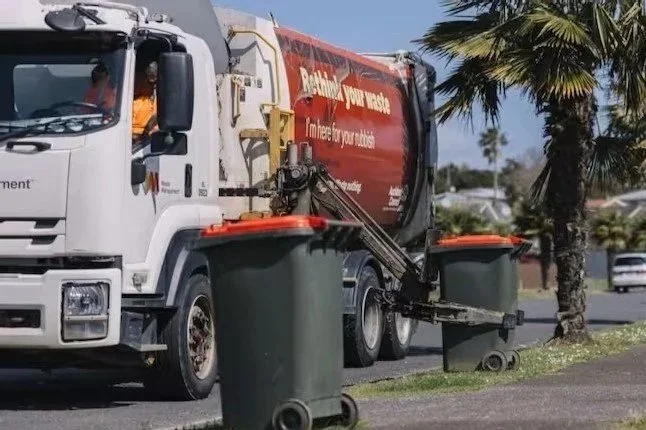
Auckland Council has released the results of public consultation on the proposed six-month trial of fortnightly kerbside rubbish collection. Across the trial areas and the wider region, the message from Aucklanders was consistent and strong.
Out of 5,086 submissions, 78 per cent opposed the trial, while just 18 per cent supported it. Even with in-person engagement, the community remained divided, with 41 per cent opposed and 35 per cent in favour.
I oppose this proposal.
Why? Because our community deserves core services, delivered consistently, on time, and within the rates we already pay. Aucklanders are facing increasing costs across the board and they expect their council to get the basics right. Weekly rubbish collection is a fundamental service, especially for families, multi-generational households, and those already dealing with capacity or hygiene issues.
While reducing waste to landfill is important, trialling reduced services before we fix existing service levels sends the wrong message. Ratepayers are already paying more and receiving less. That isn’t acceptable.
Council will now consider the consultation feedback in December. I’ll continue advocating for practical, community-focused solutions that reflect what Aucklanders are clearly asking for, reliable, high-quality services that match the rates they pay.
Auckland councillor Bo Burns pushes review of city's flat rates system
Bernard Orsman
Auckland Reporter · NZ Herald · 24 Nov, 2025 05:00 AM ·
New Auckland councillor Bo Burns has raised the thorny issue of flattening the rates system, a change favouring owners of higher-value properties.
Mayor Wayne Brown said it was too early to discuss the issue, but he looked forward to hearing the views of fellow elected members.
Senior councillor Greg Sayers has backed the proposal, placing it on the agenda for a budget committee workshop he chairs on December 3.
After barely getting her feet under the table as a councillor for Howick, Burns issued a social media post two days ago, headed “Let’s Talk Rates – and More Importantly, Let’s Do Something About Them”.
“Over the past few weeks, I’ve had multiple meetings, including a dedicated session with council’s specialist rates team, to dig deep into how our residential and business rates are structured, what levers we actually have, and where the pressure points are,” she said.
It followed her maiden speech, where one of Burns’ key priorities was to review the structure and framework of rates, specifically the uniform annual general charge (UAGC).
“It’s one of the biggest issues raised by Aucklanders to all of us over the recent election campaign. There are levers available to us, so let’s use them, or at least bring them to the table to discuss,” she said in her speech.
The UAGC flattens the rates system by shifting more of the rates burden on to lower-value properties and reducing the share paid by higher-value properties.
In practical terms, it means households in modest homes pay higher rates, while households in more expensive homes pay relatively lower rates.
In her post, Burns noted the UAGC has remained unchanged at $604 since 2012, holding steady at 13.9% of the rates take despite the council being legally permitted to set it as high as 30%.
She said the last meaningful discussion on the UAGC at council was in 2016 – a decade with no real conversation about one of the biggest issues for households and businesses.
Burns has requested a rates review be part of next year’s mayoral budget – a draft of which will be released before Christmas – or included in the 10-year budget the following year.
Burns told the Herald she favoured raising the UAGC.
She said the issue appeared to be gaining traction and would come to the table, with councillors examining the levers and options for a fairer model.
Brown said Burns was new and he was pleased to see her interest in rates, but also wanted to hear from other elected members.
“It is a bit early to be talking about this. It’s a matter for the long-term plan when we get to it,” he said.
Sayers said he would gauge the temperature among councillors on December 3 before placing it in either next year’s budget or, as seems likely, the long-term plan the following year.
“It’s appropriate to have another look at it [UAGC],” said Sayers, whose personal view was to review and increase the UAGC.
Labour councillor Josephine Bartley said she had read the 2016 report, when the council decided not to increase the UAGC partly because of equity concerns, and was worried about the implications for owners of lower-value properties.
She said it would be important to discuss the UAGC at the governing body before any decisions are made.
City Vision councillor Julie Fairey said, politically, she favoured a lower UAGC and that it was timely to consider the issue with solid information and decide whether it should be consulted on.
Fairey said she was not afraid to examine the numbers and test whether the current level remained appropriate.
In theory, the UAGC was the council’s only tool for varying charges according to means, so her instinct was to keep it low, though $604 may not be the right figure.
She noted the UAGC was only one component of rates, which accounted for about 38% of the council’s income, and argued context is crucial to the discussion.
Fairey said she was keen for the council to develop new tools to boost non-rate income and reduce reliance on rates, but said this would require support from the Government.
Deputy Mayor Desley Simpson, who represents the wealthy Ōrākei ward, said the UAGC had not been considered for some time and she would be happy to listen to advice about whether the balance in the rating system is correct to ensure equity between ratepayers.
Sign up to The Daily H, a free newsletter curated by our editors and delivered straight to your inbox every weekday.
Let’s Talk Rates — And More Importantly, Let’s Do Something About Them
RNZ INTERVIEW HERE:
One thing that always comes up in election campaigns is rates. Yet, how often do we really take action to fix them? Not nearly enough. That’s why I’m stepping in, and stepping up.
Since being elected to represent East Auckland, I’ve refused to sit back and watch rates become an ever-bigger burden on our households and businesses. Over the past few weeks I’ve immersed myself in the topic, met with the Council’s specialist Rates Team, and dug into how our residential and business rates are structured, what levers are in place, and where the pressure points lie.
In fact, I’ve formally requested that this work be included in the Mayor’s Annual Plan. If it’s not ready this year, I’m pushing for it to go into the Long-Term Plan. Because our city deserves a proper conversation about rates, We need action not just talking.
It comes down to fairness. In our current system the so-called Uniform Annual General Charge (UAGC) is a flat fee every household pays, (Currently $604 per household) regardless of income, property size, or services used. Meanwhile, the rest of your rates bill hinges on property value and “targeted rates”.
The Government has signalled a plan to cap rates, which is a good start. But to truly make things fairer, we also need to revisit the Rating Act (Section 21 in particular).
Why should the UAGC go up? Because less reliance on property value means fewer unsustainable jumps in your bill, especially when your area has just been re-valued. Because ability to pay and services received matter more than land price. Because a fair system underpins a healthy community.
Why this matters Aucklanders
Many households in East Auckland, including Howick, Cockle Bay, Rodney & Franklin, are facing rate jumps that just don’t add up. When property values surge and the UAGC remains the same, the burden falls heavily on those already paying above the average. That’s unfair.
What I’m doing next
Continuing to educate myself around everything to do with rates. (residential and business)
Advocate for a full review of the rating system in our city.
Engaging with Government to work on their changes
Talking with the community, if you have concerns, questions or want clarity on how this affects your household, I’m here. [email protected]
Thanks for reading, and thanks for engaging. Let’s change the way we all pay for our city, together.
Mental Health: Reaching Out Matters More Than You Know

Mental health challenges touch far more people than we often realise. According to I Am Hope, around 1 in 5 young Kiwis will experience significant mental distress each year, and New Zealand loses more than 600 people to suicide annually. Even more heartbreaking, every day in NZ, at least 14 young people are referred for acute mental health support, yet many never get the help they need.
Reaching out is not a sign of weakness — it’s the strongest step anyone can take. Whether you’re struggling, or someone you love is, please know you’re not alone. Support is available 24/7, and there are real people on the other end who genuinely care.
If you ever need someone to talk to, you can reach out to me anytime. And if you or your family need practical help, East Auckland has incredible local food banks and church support networks:
👉 https://www.times.co.nz/advert-category/local-food-banks-east-auckland/
Where to get help:
• 1737 – Call/text 1737 to talk to a counsellor
• Anxiety NZ – 0800 ANXIETY
• Depression Helpline – 0800 111 757 or text 4202
• Lifeline – 0800 543 354
• Rural Support Trust – 0800 787 254
• Samaritans – 0800 726 666
• Suicide Crisis – 0508 828 865
• Yellow Brick Road – 0800 732 825
• thelowdown.co.nz – Text 5626
• What’s Up (ages 5–18) – 0800 942 8787
• Youthline – 0800 376 633 or text 234
• Aoake te Rā – 0800 000 053
If life is in danger, call 111 immediately
Welcome to Auckland – A Newcomer’s Guide to Life in Auckland

Auckland Council has launched a fantastic new resource for anyone beginning their journey in our beautiful region — the Welcome to Auckland portal.
👉 Visit it here: https://ourauckland.aucklandcouncil.govt.nz/welcome-to-auckland/
If you’ve recently moved to Auckland, or you know someone who has, this online hub is designed to make settling in easier, more connected, and a whole lot less overwhelming.
What Is the Welcome to Auckland Portal?
The portal brings together all the essential information a newcomer might need — from local services and community facilities to how to get involved in civic life. It’s a one-stop shop that helps you understand how Auckland works and where to access support.
This initiative is based on the Welcoming Communities framework (led nationally by MBIE) and aligns with Auckland Council’s commitment to creating thriving, inclusive communities.
Why This Matters for New Aucklanders
Auckland is one of the most diverse cities in the world. Every year, thousands of people choose our city as their new home, and the Council’s goal is to ensure everyone feels that sense of belonging right from the start.
Kenneth Aiolupotea, General Manager Community Wellbeing, says it beautifully:
“This portal is a powerful tool in improving social cohesion and ensuring that our newest residents can fully participate in the economic, civic, and cultural life of our city from the moment they arrive.”
The portal isn’t just about practical information — it includes insights shaped by the experiences of recent migrants, mana whenua perspectives, and introductions to the cultural identity of Auckland, including Te Tiriti o Waitangi, local iwi and hapū, and significant cultural events like Matariki.
Workshops and Real-World Support
To complement the portal, Auckland Council is rolling out practical newcomer workshops across nine local board areas. These sessions cover:
How to use public transport
Accessing local services
Connecting with community programmes
Understanding your local board and how to participate
These workshops are delivered with support from trusted local community organisations and give new residents a friendly, hands-on start.
Sunita Kashyap, Community Innovation Manager, explains:
“When we design for newcomers, we are designing for the entire community… we are setting a foundation for genuine understanding and lifelong belonging.”
A Warm Welcome to You
Whether you’ve arrived from overseas, another part of New Zealand, or you’re helping someone new settle in — Nau mai, haere mai ki Tāmaki Makaurau. Welcome to Auckland.
Your new community is ready to support you as you settle, connect, and make this place home.
If you need help navigating services or finding local groups in East Auckland, feel free to reach out — I’m always happy to point you in the right direction.
Why You Should Make a Submission on PC120
Shaping the Future of Your Neighbourhood
If you live in Auckland (and especially in East Auckland ), the recently notified Plan Change 120 is a big deal — and here’s why it’s worth your time.
What is PC120?
Plan Change 120 is the update to the Auckland Unitary Plan that sets out how land can be used, where housing and commercial buildings can be built, how high they can go, and how we prepare for natural hazards like flooding, coastal erosion and landslides. https://ourauckland.aucklandcouncil.govt.nz/news/2025/10/what-auckland-s-new-plan-means-for-your-neighbourhood/?utm_source=chatgpt.com
Why It Matters to You
Housing & neighbourhood character – The rules for where new homes (townhouses, terraces, apartment-style) can go are changing. Some areas may see higher density, taller buildings, or new restrictions.
Risk and resilience – PC120 introduces tougher controls for areas prone to flooding, erosion or other natural hazards so our communities are safer long-term.
Transport & infrastructure – The plan aims to encourage new homes near rapid transit, busways, train stations and major town centres. That means your street could change, or the area around your local centre may be targeted for growth.
Your say matters – This is your opportunity to influence what happens in your area. Even if you’re comfortable with the change, your input can help ensure protections, clarify rules, and reflect local views.
Key Dates You Should Know
Submissions open: 3 November 2025
Submissions close: 5 pm Friday, 19 December 2025
Visit the official page for PC120 and associated maps:https://akhaveyoursay.aucklandcouncil.govt.nz/aucklands-future-housing-plan
How to Make a Submission
Go to the AK Have Your Say website: https://new.aucklandcouncil.govt.nz/en/plans-policies-bylaws-reports-projects/our-plans-strategies/unitary-plan/auckland-unitary-plan-modifications/proposed-plan-changes/pc-120-housing-intensification-resilience.html
Download or complete the official submission form (Form 5) if you prefer to mail it. https://new.aucklandcouncil.govt.nz/en/plans-policies-bylaws-reports-projects/our-plans-strategies/unitary-plan/auckland-unitary-plan-modifications/proposed-plan-changes/pc-120-housing-intensification-resilience/pc-120-submission-form.html
Determine which zone your property is in, what changes are proposed for your street or local area (look at the maps). https://experience.arcgis.com/experience/a69c494d01e341689b68a89a6eea2b86
Write your submission: detail whether you support, oppose or wish to amend the proposed changes, give reasons, include any evidence you have (local knowledge of flooding, traffic, infrastructure, community character).
Submit online or via post before the closing date (19 December 2025).
Consider whether you wish to attend a hearing (if you want to speak), or just make a written submission.
Tips for a Strong Submission
Keep it honest and personal, “I live on X Street, I see Y issue…” works better than general statements.
Tie your points to the actual rules or proposed changes (e.g., “In my area, the proposed height of 6 storeys is too much because…”).
Provide evidence or examples, if you know your street floods, mention that. If traffic is already heavy around the local centre, mention that.
Be clear on what you want, do you support with changes, oppose outright, or support certain parts only?
Mark any parts that affect your specific local area ( Howick, Cockle Bay etc).
Attend or listen to an online session if offered, hearing from council staff, seeing maps live helps you understand the proposals better and improves your submission.
Why Your Involvement Is Important
Without community submissions, decisions tend to favour broad policy rather than local nuance. By participating:
You help balance city-wide growth pressures with local infrastructure and character.
You give voice to how your suburb or street may realistically change.
You help ensure protections for things you care about, neighbourhood character, views, sunlight, parking, flood-risk, etc.
Bo Burns’ maiden speech as councillor

New councillor for the Howick ward, Bo Burns, centre, with her very proud family, from left, Lucy, Pip, Charlie and Brendon. Photo supplied
New Auckland councillor for the Howick ward, Bo Burns, made her maiden speech to the Auckland Council on Tuesday, November 11. Here it is:
Good afternoon, Mayor Brown, Deputy Mayor Simpson, fellow councillors, and supporting staff.
I am truly honoured to be here today. Apart from my husband Brendon, my daughters Lucy and Charlie, and my mother Pip, I have 12,038 residents of east Auckland to thank for this opportunity – for trusting and believing that I will make a difference and be the voice they deserve and need.
My community will always be my anchor point when thinking and deliberating on local and regional decisions.
It’s never been about what I think – it’s about what’s best for my community.
Although I’m not a career politician, I come from a family with a strong thread of public service and leadership – business owners, lawyers, and politicians.
My great-great-grandfather, James Macandrew, whose statue stands proudly outside the Dunedin Museum.
He was a very successful businessman and served as a Member of Parliament from 1853 to 1887 and as the last Superintendent of Otago Province.
One article described him as ‘a man whose energy, enthusiasm, and vision livened up the little village of Dunedin’.
That resonates deeply with me because that’s how I feel about my own village, Howick.
I’m a business owner, a wife, a mum, a sports coach, a business mentor, and a community connector.
I’ve spent my life giving back – volunteering, fundraising, sitting on PTAs, industry boards, supporting sports clubs, mentoring youth, and advocating for local business owners.
I’m not afraid to roll up my sleeves, work hard and make things happen.
My journey started from the ground up – no university, no handouts.
I had to work hard, stay determined, and hold onto core values and beliefs: I care deeply about my community and its people.
Through that, I’ve built strong relationships and achieved real results along the way with the support of people such as my mentor and friend Adele White, who I was elected with for the first time on the Howick Local Board six years ago, where this journey began.
To me, leadership isn’t about titles. It’s about service. It’s about being accountable, visible, and someone the community knows will show up.
It’s about bringing commonsense to the table and making decisions our future generations will thank us for.
Shape – My Vision for Auckland
My vision is simple: A city people not only want to live in, but love and feel proud of.
Too often now I hear people say: “I don’t want to live here anymore.” That breaks my heart.
We need a city where local decisions are made locally. A city that values our environment, our waterways, beaches, reserves, safety, tourism and community connection.
A city that celebrates the unique character and diversity of every suburb – from Howick to Henderson, Franklin to the Shore.
We know blanket approaches and initiatives such as PC120 will never work for all of our incredibly different communities and beautiful suburbs.
For some it suits, and for some it will decimate not only places people long to live but put even more pressure on ageing infrastructure and our environment.
We must simplify how we communicate so Aucklanders feel heard, understood, and engaged – not frustrated or excluded.
We need to change the mantra of “there is no point, no one listens”.
This role carries a huge responsibility. It’s not just about managing budgets or debating policies and bylaws – it’s about rebuilding Aucklanders’ trust in their council.
Without genuine connection and transparency, we can’t truly serve our people.
We must stop, listen, and respond with care – not knee-jerk reactions or constant excuses about lack of funding.
I was raised to believe you have to spend money to make money.
If we want meaningful engagement and turnout for elections and “Have Your Say” events, we can’t keep investing 17 cents per person and expect real democracy.
When only 15 per cent to 28 per cent of people are engaging, democracy isn’t functioning as it should.
Shape – How I Work
I’m a results-driven person who believes in communication, collaboration, and execution.
I look forward to building strong and functional relationships with my and other local boards, and with our local MPs Simeon Brown, Christopher Luxon, Nancy Lu, and Parmjeet Parmar.
Strong communities build strong cities: “When a team is rowing in the same direction, we know we’ll reach the finish line stronger.”
Some decisions ahead will be difficult, but we must always think long-term – about what we’re leaving behind for future generations.
We cannot hand over a broken or dysfunctional city.
Shape – My Key Priorities
When asked to meet with [Auckland Council chief executive] Phil Wilson recently, I was told to take my top three priorities for this term.
My list quickly turned into 14. Some for my community and many for Auckland as a whole.
These are the key areas I’d like to focus on this term:
Rates
Reviewing the structure and framework of rates – specifically the UAGC (Uniform Annual General Charge).
It’s one of the biggest issues raised by Aucklanders to all of us over the recent election campaign, and there are levers available to us – so let’s use them, or at least bring it to the table to discuss.
Community Facilities for Flat Bush and Ormiston
East Auckland has 180,000 residents and growing. Flat Bush and Ormiston is the fastest-growing community and has waited more than 20 years for proper facilities.
It’s been so long that the long-term plans (LTPs) were actually long-term council community plans (LTCCPs).
It’s time to deliver for these 45,000 people a community facility to bring them together, and the bigger issue is the pressure the additional 45,000 people are putting on our other Howick ward facilities that are bursting at the seams.
Sports Clubs
Supporting our large sports clubs such as Howick Pakuranga Netball Centre, many of which run on the smell of an oily rag.
We need to strengthen partnerships, grants, and support to create safe, accessible, high-quality spaces – with proper lighting, parking, and facilities worthy of hosting national and international events.
An active and healthy community is a happy one.
Car Parks – Bucklands Beach Yacht Club and others
We need bold thinking and collaboration to create better parking solutions that can also generate passive income for council.
Smart infrastructure like this helps both local tourism and wider city flow with less cars on the road.
Right now, we have an amazing transport hub in Half Moon Bay that no one can park at or get to reliably.
Beaches, Streams, and Coastlines
Protecting and monitoring properly these natural assets to ensure we don’t lose them to poor infrastructure or intensification decisions.
Future generations should be able to safely swim in their local beaches – not worry about sewage overflow.
Corporate Lens on Council Assets
Applying commercial thinking to how we manage property, facilities, and procurement.
We should modernise our corporate sponsorship policy (last updated in 2014) and make it easier for local businesses to be part of local procurement.
Every park, bin, and playground has potential for innovative revenue streams if we think smartly.
Tourism
East Auckland deserves to be on the map. We have many beaches, golf courses, cycle trails, temples, playgrounds, malls, a beautiful historical village, and a rich cultural history just 35 minutes by ferry from the CBD and we are not seen as a destination.
All our wards’ tourism groups across Auckland should be directly funded and supported to deliver events and tourism initiatives that showcase their unique strengths and attract tourism out to the suburbs.
Core Services and Value for Money
Ensuring our core services are delivered regularly, on time, and within budget, so Aucklanders see results and value for their rates.
Shape
To everyone who believed in me, supported me, and challenged me – thank you.
I’m here to represent with integrity, passion, and determination. To bring fresh thinking, fast execution, and real results – cutting through the red tape and excuses.
Together, I want to make Auckland the most sensational, inspirational, and celebrated city in the world.
Disclaimer: Bo Burns is the owner of Times Media.
Councillor Burns hits ground running

New councillor for Howick, Bo Burns, with second-term Auckland Mayor Wayne Brown, at The Apothecary Café in Picton Street last week. Times photo PJ Taylor
New Auckland councillor for Howick, Bo Burns, has set out what she wants to initially accomplish in this three-year term serving on the city’s Governing Body.
Burns says there are long-term goals she wants to achieve, as well as “important smaller wins along the way”, but for now, during her Auckland Council induction week, her focus is on “a strong six-month action plan” with three priorities.
“Building strong relationships around the council table. Respectful and collaborative relationships lead to better decision-making and outcomes, not just for east Auckland, but for all wards.
“I want to be a team player around the council table, bringing fresh, innovative and logical solutions forward.”
Burns was the top polling candidate in the recent election contests for the two Howick councillor seats, and the Howick Local Board, for which she was deputy-chair in the last term.
She’s keen to “re-establish a productive relationship with the Howick Local Board”.
“Regular communication between the councillors and the local board is imperative,” says Burns.
“I believe a strong, trusted partnership is essential to advocate for our community and make sure local voices are heard and good feedback delivered.
“There is power in 13 people standing up for our area, and I’m looking forward to driving our voice into council.”
She also intends to hold community meetings with stakeholders such as resident and ratepayers’ groups.
“To understand the key issues our community wants addressed and the areas they’d like me to focus on.
“I’m a firm believer that collaboration delivers the best results, and what could be more powerful than working alongside the people who elected me and care deeply about our area.”
Burns is also keen on working “quickly to get up to speed with new council protocols”.
“From there, I’ll develop a clear plan shaped by what I learn from the council, the board, and our community.
“Communication will be vital, educating and updating the community regularly, and maintaining strong and trusted relationships at every level.
“I’m looking forward to listening, planning, and delivering on what matters most to east Auckland.”
Auckland Council local elections 2025, final official result for the two Howick ward councillor seats: Bo Burns 12,038, Maurice Williamson (Independent) 11,535, Paul Young (Independent) 9615, Damian Light (Independent) 7873, Barry Jensen 5461, Stephen Hill 4736, Ali Dahche (ACT Local) 3902, Leanne Seniloli 2947, Informal votes 108, Blank ballots 642.
Auckland Council’s Governing Body for the term 2025-2028:
Mayor: Wayne Brown
Ward and councillors:
Albany: Victoria Short, John Watson
Albert-Eden-Puketāpapa: Julie Fairey, Christine Fletcher
Franklin: Andy Baker
Howick: Bo Burns, Maurice Williamson
Manukau: Alf Filipaina, Lotu Fuli
Manurewa-Papakura: Daniel Newman, Matt Winiata
Maungakiekie-Tāmaki: Josephine Bartley
North Shore: Richard Hills, John Gillon
Ōrākei: Desley Simpson
Rodney: Greg Sayers
Waitākere: Shane Henderson, Ken Turner (WestWards)
Waitematā and Gulf: Mike Lee
Whau: Sarah Paterson-Hamlin
Disclosure: Bo Burns is owner of Times Media.
Meet Auckland's newest councillors

Victoria Short is Albany's newest councillor, joining John Watson.
Five new people will join Auckland Council, with preliminary voting results showing they’ve stamped their place as the region’s newest councillors.
Victoria Short in Albany, Bo Burns in Howick, Matt Winiata in Manurewa-Papakura, Sarah Paterson-Hamlin for Whau and John Gillon for North Shore will join 15 incumbents as councillors for the next term.
In probably the biggest election shock in Auckland, Short displaced incumbent Wayne Walker to top the Albany poll with 16,188 votes in the preliminary results. That was 898 votes more than John Watson who makes a return to the council table.
The final declaration of results, including the validation of special votes, will confirm the official makeup of Auckland’s new council and 21 local boards.
On Saturday morning more than 68,500 votes were cast, bringing Auckland’s voter turnout to 28.8%.
Albany: Victoria Short

Mayor-elect Wayne Brown and Albany's Victoria Short.
Jonathan Killick / The Post
Short said the last 48 hours had been filled with tears, joy and outright shock.
“I am so deeply humbled by the results, and completely blown away by all the messages, emails and phone calls I have received,” she said.
Short has been a member of the Hibiscus and Bays Local Board for the last two terms. Last election she ran for council but lost to Watson and Walker.
“This honour feels heavy and to be honest, a little scary. But I am so pumped for the next three years, and I will do my very best to make you all proud.
“There’s heaps that need to be done and obviously a lot that I still have to learn. The people in the Albany ward are going to have a councillor who is going be present, active, and definitely pushing for what they elected me to do.”
Howick: Bo Burns

New Howick ward councillor Bo Burns.
Former Howick Local Board member, Burns said she was blown away by the results which saw her gain 11,918 votes to be the front runner for the Howick ward.
In a social media post, Burns said she was humbled by the results.
“I can't say thank you enough,” she said.
“I think there are a few more to count, final numbers declared the 17th October, but I am super happy with this and very excited for induction next week and to get stuck in.”
Born and raised locally, Burns in her campaign profile said she knows what her community needs.
“With over 23 years as a local business owner, my strength is communication, making money, saving money and knowing how to execute plans.
“I'm committed to reducing crime, improving public transport, delivering projects on time and budget, protecting our beaches, parks and heritage and supporting business and tourism.”
Manurewa-Papakura: Matt Winiata

Former Manurewa Local Board chair Matt Winiata has been elected as Manurewa-Papakura's newest councillor.
Torika Tokalau/Stuff
Winiata polled 13,052 votes in the preliminary results, and will join Daniel Newman as Manurewa-Papakura councillor. The seat was left vacant by Angela Dalton who retired this year.
Winiata said he’s very excited to start his new role, after a term with Manurewa Local Board as chair.
Regulations on the sale of nitrous oxide canisters, animal management and illegal dumping will be his priorities.
“We’ve got some hefty issues to deal with, the local boards are going to be dealing with cost pressures. Papakura is going to be significantly affected by that. They are looking at opportunities in the regional level for facilities in Manurewa.
“But I’m going into it with an open mind, I do have some key things but there’s also having to let go of the local board direction to focus on everything from a regional level and how decisions affect the city.”
North Shore: John Gillon

John Gillon joins Richard Hills as North Shore councillor.
Gillon was ecstatic about the results, especially after almost a year of trying to raise his profile in the North Shore.
He’s been serving as the chair of the Kaipātiki Local Board for the last eight years, and had a background in technical writing for software user manuals.
“It’s been a really busy year,” Gillon said.
“I’m well known in the Kaipātiki side, but less well known in the Devonport-Takapuna side. I’ve been doing a lot of door knocking, had a newspaper that covered a number of topics that I delivered to every household.”
He was looking forward to having a break this week before getting inducted and starting his role as the new North Shore councillor, alongside Richard Hills.
“It’s going to be interesting to see how it all comes together. There’s definitely some key areas that I’m wanting to pursue and I’m hoping to get some support around the table for those.”
Whau: Sarah Paterson-Hamlin

Sarah Paterson-Hamlin is the new Whau councillor in Auckland.
She first dipped her toes into local politics in 2022 and was elected into the Whau Local Board. Three years later, she took a bigger step and ran for councillor, polling 5074 votes to win.
“There’s been a lot of emotions, maybe all of the emotions, probably the top one is relief,” Paterson-Hamlin said on Tuesday.
Paterson-Hamlin’s background was with charities and disabilities, and being autistic herself, she hoped to bring that experience to council.
She said her one term as a local board member was a huge learning curve for her.
“I’m so grateful that I come into this councillor role with those three years behind me, I’ve learnt so much about local government, working with people who agree and disagree with you, how council operates - it’s a big beast.
“I have been frustrated at some of the approaches or lack of approaches towards disability and accessibility concerns, that’s a big part of why I ran for council. I do feel that’s been quite lacking.”
To view the full list of preliminary results, visit Vote Auckland.
Burns and Williamson top Howick ward councillor vote

Happy, successful candidates on Auckland Council local Election Day, from left, Adele White (We Know Howick), who is returned to the Howick Local Board; and incoming Howick ward councillors, incumbent Maurice Williamson; and highest-polling candidate Bo Burns, who has also led the candidates’ race for the Howick Local Board in the Howick subdivision. Times photo
Bo Burns and Maurice Williamson will represent the Howick ward as councillors at the Auckland Council’s Governing Body table for this next three-year term.
They have finished first and second respectively in the local elections that concluded today.
Burns, the owner of Times Media publishers of the Eastern Times, has finished as the highest polling candidate with 10,222 votes.
She has also topped the vote tallies for the Howick subdivision in the Howick Local Board election, and is expected to take up the councillor role, making the position available on the Howick Local Board for the fourth-placed candidate, Luke Collings (C&R).
Burns’ We Know Howick ticket running mates, longstanding incumbents John Spiller and Adele White, were also successful in being returned to their Howick Local Board seats.
Former government minister and MP for Pakuranga for three decades Williamson came in second with 9801 ballots.
Eight candidates contested the Howick ward councillor election race that was for two seats at the council.
Preliminary results will be announced on Monday, October 13, which include ballots cast today Saturday.
Final Auckland Council election results are released by Friday, October 17.
Howick Ward councillor election day Progress Result, on Saturday, October 11:
1 – Bo Burns 10,222
2 – Maurice Williamson (Independent) 9801
3 – Paul Young (Independent) 7951
4 – Damian Light (Independent) 6382
5 – Barry Jensen 4247
6 – Stephen Hill 3951
7 – Ali Dahche (ACT Local) 3273
8 – Leanne Seniloli 2330
Informal votes 97
Blank ballots 513