Rates caps are one thing, but what are council’s core services?
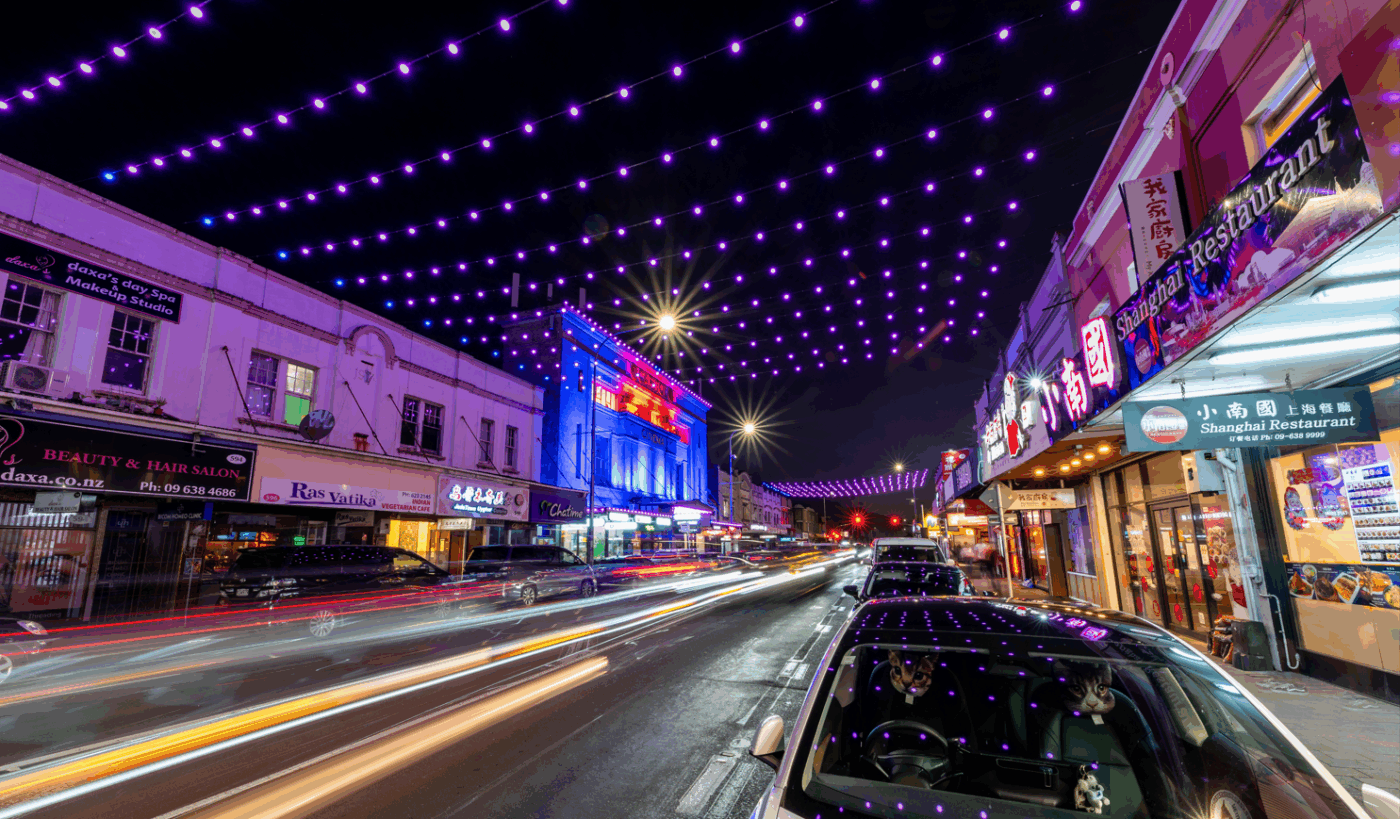
Auckland Council funds a range of public events around the city each year. File photo supplied
By Howick Ward Councillor Bo Burns
The Government’s proposed rates cap has reignited an important conversation about council spending.
I don’t have an issue with the principle that councils should live within their means, find savings, create innovative new sources of income and focus ratepayer money on the services Aucklanders actually need.
For Auckland, the mayor has already promised rates increases of around 3.5 per cent for each of the next two years, putting us below the Government’s proposed four per cent cap.
But for me, there is a much bigger conversation we need to have: what exactly are the council’s core services?
I think most ratepayers would have a fairly clear answer.
Roads and transport, rubbish and waste, water infrastructure, stormwater, parks, pools, libraries, community facilities, and the essential services required to keep Auckland functioning.
We then need to transparently look at how much we spend in each of those buckets, whether we are getting value for money and where our priorities should sit.
When households face financial pressure, they prioritise. They pay the mortgage, electricity and groceries before spending on nice-to-haves.
You wouldn’t expect a family struggling to pay its bills to dine out for 5-star expensive dinners, instead of buying cost-effective groceries.
Council needs to apply the same common sense.
That doesn’t mean things such as public artwork, beautification, or other discretionary spending have no value.
It means that when finances are tight, we must distinguish between needs and nice-to-haves.
I believe we should pause nice-to-haves while we are struggling to find a budget to fix serious infrastructure shortfalls.
Just as I have pushed for a proper governing body discussion about Auckland’s rates system, I want us to have the same transparent conversation about core services.
A rates cap alone won’t fix council finances. We need discipline, innovation, alternative revenue, efficiencies, and clear priorities.
Aucklanders deserve to know their rates are being spent wisely on the things that matter most.
Parking rules need reality check

Car parking isn’t always easy to find in east Auckland. Times file photo
By Bo Burns, Howick Ward Councillor
Parking pressures are one of the biggest issues I hear about across east Auckland, and it is only getting worse as intensification ramps up.
In 2021, the Government introduced the National Policy Statement on Urban Development (NPS UD), which removed minimum parking requirements for most developments.
In simple terms, councils can no longer require developers to provide parking.
While this was aimed at increasing housing supply, the unintended consequence is now playing out on our streets.
Overflow of parking, congestion, and growing frustration for residents.
I recently wrote to local MPs asking for this to be urgently reviewed as part of the Auckland Unitary Plan changes this year.
My message was clear. Planning rules must reflect how people actually live.
Not everyone can walk, bike, or catch public transport, especially in areas where the network is still developing.
Last week, Housing Minister Chris Bishop acknowledged the concerns and confirmed the Government is looking at changes to give councils more flexibility around parking provisions. That is a positive step, but we need action.
At the same time, we must invest in realistic alternatives. Park and ride facilities, better commuter parking, and reliable connections are critical.
I recently tried to catch the ferry from Half Moon Bay but found no parking available, forcing me to drive into the city instead.
I will continue advocating for well-planned intensification.
Growth must be supported by infrastructure, including practical parking solutions that work for our communities.
Follow updates: Facebook.com/BoBurnsCouncillor
What’s happening across the Howick ward

Howick ward councillor Bo Burns says she recently visited Cockle Bay with Watercare to see new wastewater monitoring sensors in action. File photo supplied
By Howick Ward Councillor Bo Burns
The past two months have been busy across our ward, with some important updates that directly affect our community.
Many of you have contacted me about Plan Change 120 (PC120). The Government has now reduced Auckland’s housing capacity requirement from two million to 1.6 million.
We’re awaiting updated direction and clearer timelines for our area, and I want to ascertain for our community what the impact is for us.
For example, will the high route corridor that was identified on Sandspit Road and Somerville Road be removed?
I’ll continue advocating for sensible planning in east Auckland and any updates I receive I’ll share on my social media platforms at www.facebook.com/boburnsnz.
On Pakuranga Highway, CCTV enforcement of the T2 lane begins on March 16 between Gossamer Drive and just past Pigeon Mountain Road.
Drivers using the lane for more than 50 metres without two occupants face a $150 fine. You may enter the lane briefly when turning.
I recently visited Cockle Bay with Watercare to see new wastewater monitoring sensors in action.
Around 360 are now installed locally. These detect issues early, helping prevent overflows into our beaches.
As part of Auckland Council’s Value for Money Committee, we recently reported back that halfway through the financial year the council has achieved savings of $67.9 million against our savings target of $86m (79 per cent of the target) – noting our annual target is $20m higher than last year’s.
My focus remains clear. Deliver core services well, reduce wasteful spending, and ensure every dollar works harder for you.
As always, keep the emails coming. Your voice matters. Have a great March.
Fought hard against 7.9 per cent rates increase

“We were asking council to challenge itself, scrutinise spending and investigate whether meaningful savings could reduce the impact on Auckland households.” Photo supplied
By Bo Burns, Howick Ward Councillor
Over the past few weeks, I received hundreds of emails, messages, phone calls and people stopping me on the street about Auckland Council’s proposed rates increase to 7.9 per cent.
The message was consistent.
Pensioners were worried. Single parents were worried. Small business owners were worried. Families already juggling mortgages, insurance, food and power bills were worried.
I want those people to know that I heard them.
Firstly, let me say that I have respect for Mayor Wayne Brown.
I supported him through both mayoral campaigns and recognise the difficult job he has leading a city of 1.8 million people while balancing major infrastructure demands and financial pressures.
However, I could not support a 7.9 per cent rates increase without first asking whether we could do better.
I was not afraid to take the challenge to find more savings. I am a business owner, so I know how to make money, but also identify how to save money.
Alongside Maurice Williamson and six other councillors, I pushed for Auckland Council to look harder for savings and efficiencies before asking ratepayers to carry more of the burden.
We weren’t proposing cuts to libraries, parks, playgrounds, or local community groups.
We were asking council to challenge itself, scrutinise spending and investigate whether meaningful savings could reduce the impact on Auckland households.
In the end, we lost the vote. Each 1 per cent we dropped by, we had to find savings of $30 million – so a 2 per cent drop meant $60m in savings to find.
Difficult, yes. Impossible, no.
Unfortunately, we didn’t win the vote with our amendment of 5.9 per cent, so 7.9 per cent was approved, and remember this is an average, not an overall general capped rate.
We deserve a council that never stops looking for value, never stops asking the hard questions, and never forgets who pays the bills.
I will be hosting an afternoon in the coming months, deep diving into rates, and options moving forward with guest speakers.
This will be a great event for all to attend, and you can follow updates on this here: www.facebook.com/boburnsnz.
Rates glorious rates – event coming!

Howick ward councillor Bo Burns is hosting a free community information afternoon to help people better understand rates on Saturday, August 22, from 2pm to 5pm at the Howick Club. File photo
By Bo Burns, Howick Ward Councillor
Every year Aucklanders receive their rates bill, yet very few of us truly understand how it is calculated, what we are paying for, or what alternatives exist.
With discussions around rates capping, Auckland Council’s rates review, and future funding models now gaining momentum, I believe there has never been a more important time for our community to become informed.
That is why I am hosting and inviting residents to Understanding your Rates, a free community information afternoon on Saturday, August 22, from 2pm to 5pm at the Howick Club.
This is not a protest or political rally. It is an educational event.
We will hear from independent experts on land value rating (LVR), explore how general rates, business rates, the uniform annual general charge (UAGC), business rates, targeted rates and developer contributions work, and discuss the funding levers available to Auckland.
My view is simple: an educated community is an informed community.
Before decisions are made that could affect every household and business, we should all understand the facts, the options and the consequences.
Attendance is free, but registration is essential. You can register here: Better Rates for Auckland Event.
To keep up to date with my work as your councillor, follow my Facebook page: Councillor Bo Burns on Facebook.
I hope to see you there on Saturday, August 22.
Illegal dumping in east Auckland: We cannot keep going around in circles
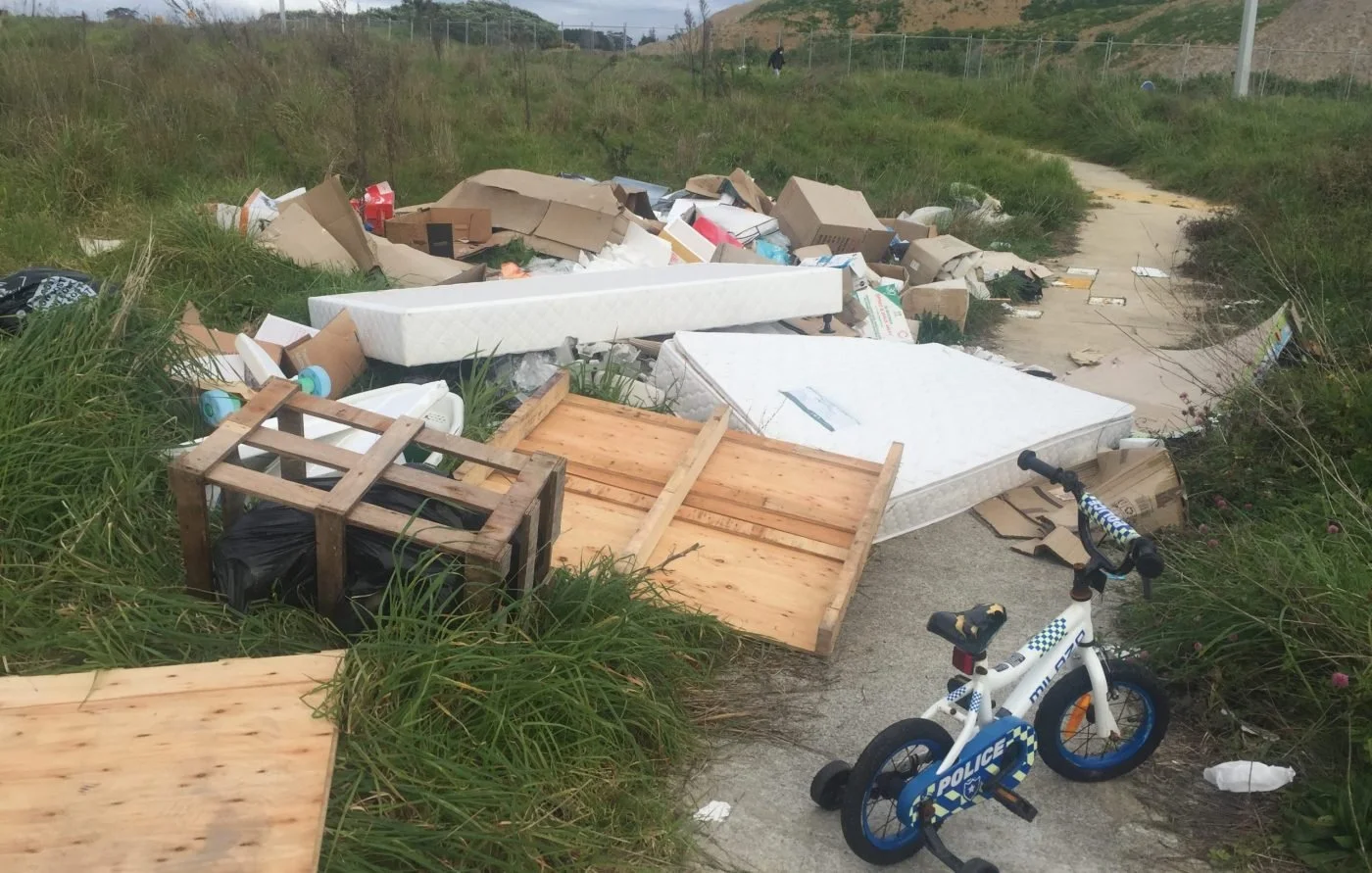
Illegally dumped rubbish, such as this large pile in Flat Bush, is still a major issue in some parts of east Auckland. Times file photo
By Bo Burns, Howick Ward Councillor
Illegal dumping continues to be one of the most frustrating and visible issues facing many of our east Auckland communities, particularly around Flat Bush, Ormiston, Whitford and Clevedon.
Recently, I met with the dedicated team at the Beautification Trust, who provided me with a comprehensive overview of the illegal dumping challenges they deal with across south Auckland, along with some of the proactive solutions they have successfully implemented.
One option discussed was the possibility of the Howick Local Board funding the Beautification Trust services for two full days per week in our area, at an estimated cost of around $120,000 per year.
This would provide a far more proactive approach to education, engagement, reporting, and clean-up support.
However, after also meeting with Auckland Council’s compliance team, it became very clear to me that part of the challenge lies within the system itself.
Currently:
Compliance teams deal with commercial illegal dumping
• Waste Solutions deal with residential dumping
The reality on the ground is very different.
In areas such as Flat Bush, Ormiston, and surrounding areas we are seeing a mix of residential and commercial dumping.
The lines are often blurred, yet the system remains split between multiple departments and agencies.
Personally, I believe these functions should sit under one coordinated operational team.
At present there appears to be duplication and overlap in administration and processing.
I also know many Howick Local Board members have advocated for years to have our own Community Recycling Centre.
Despite being Auckland’s largest and fastest-growing areas, with significant population growth and council assets, we still do not have a dedicated recycling centre, while one is now planned for Drury not far from the current Manurewa facility.
Over the years many groups have worked hard to tackle this issue:
Local board members
• Councillors
• Residents and ratepayer groups
• Contractors
• Police
• Compliance teams
• Waste Solutions
• Beautification Trust
• Community organisations
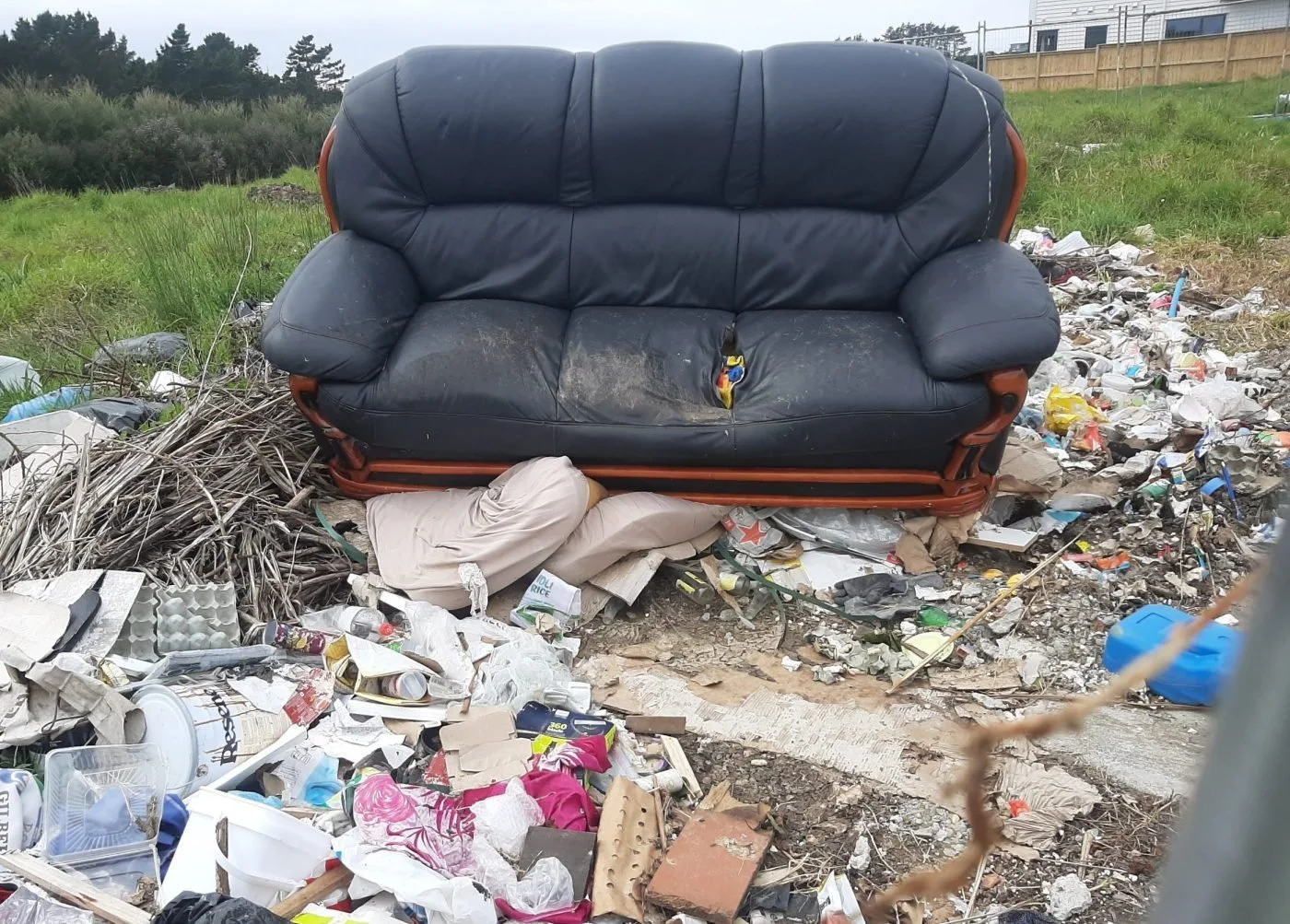
A pile of dumped rubbish, including a large couch, in Bremner Ridge Street, Flat Bush. Times photo
Yet despite years of discussion, meetings, and reports, the problem has not significantly improved. In many locations, it has become worse.
So what is the solution? The reality is there is no single silver bullet.
Illegal dumping is not simply a rubbish problem. It is also an education issue, an enforcement issue, a social issue, and, in some cases, a cultural issue.
After speaking with multiple organisations and community groups, I believe the solution needs several components working together.
Education
We need stronger education campaigns delivered in multiple languages, including:
English
• Mandarin
• Hindi
Many residents genuinely do not understand:
Where certain items can be disposed of safely
• How to dispose of large household items
• The environmental impacts of illegal dumping
• The costs to ratepayers
• The recycling options already available
For some people, illegal dumping has unfortunately become learned behaviour over generations or comes from countries where waste management systems operate very differently to New Zealand.
Better enforcement
Compliance officers need stronger enforcement tools and better coordination between departments.
People need to understand there are real consequences for illegally dumping rubbish.
While enforcement alone will not solve the issue, it remains an important part of the solution.
Practical support
Community groups consistently raise several contributing factors:
Large households generating more waste
• Cost barriers to disposal
• Lack of transport to disposal facilities
• Language barriers
• Limited awareness of recycling and disposal options
• Transient living arrangements
• Businesses attempting to avoid commercial disposal costs
Money is not always the primary reason people dump rubbish illegally.
Sometimes it is convenience. Sometimes it is a lack of education.
Sometimes it is poor systems. Sometimes it is cultural habits.
Sometimes people simply do not know where to go.
That is why enforcement alone will never solve the problem. We need a coordinated approach
What became very clear through all these discussions is that we cannot continue going around in circles.
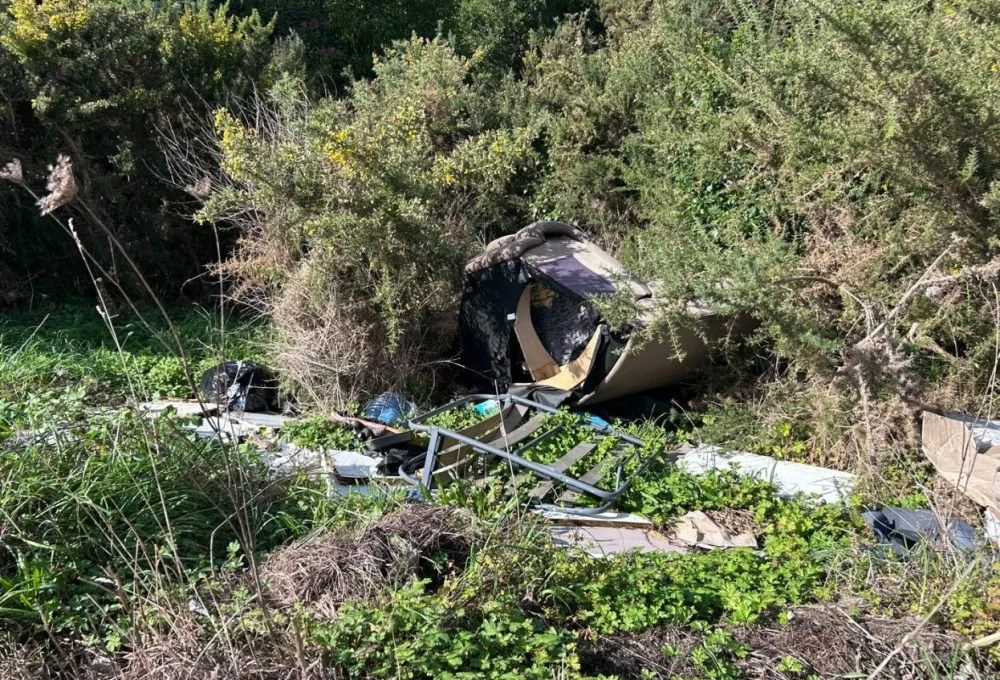
Rubbish dumped in Elevation Street in Flat Bush. Times file photo
We need:
One coordinated response
• Shared accountability
• Better education
• Smarter enforcement
• Practical disposal solutions
• Strong community partnerships
There is a way forward, but it will require Auckland Council, stakeholder agencies, community organisations and residents working together rather than operating in silos.
One of the most helpful things shared with me recently was a practical recycling and disposal guide developed with support from the Beautification Trust and local community feedback.
Many residents simply do not realise how many recycling and disposal options already exist.
From e-waste and batteries to paint, polystyrene, soft plastics, clothing, and whiteware, there are many free or low-cost options available if people know where to go.
Illegal dumping impacts all of us:
Our streets
• Our waterways
• Our parks
• Our town centres
• Our rates bill
• Our community pride
East Auckland deserves cleaner streets, safer public spaces, and a system that actually works.
I will continue pushing for practical solutions, stronger collaboration, better education, improved enforcement, and real action on this issue.
Recycling and disposal options for east Auckland residents
For a full list of Auckland Community Recycling Centres visit:
https://www.aucklandcouncil.govt.nz/en/rubbish-recycling/community-recycling-centres.html
Common local recycling options
Batteries
• Bunnings Botany – Free
• Phoenix Metalman Recycling, East Tamaki
Car Batteries and Used Oil
• Repco Botany – Free
E-Waste
• Trinity Methodist Church E-Waste Collection, Highland Park
• Tamaki Zero Waste Hub, Glen Innes
• Echo Tech, Penrose
Soft Plastics
• Woolworths Beachlands
• Woolworths Botany
• Woolworths Highland Park
• Woolworths Meadowlands
• The Warehouse Pakuranga
Polystyrene
• Mitre 10 Mega Botany – Free
Paint
• Resene ColorShop Huntington Park
Whiteware
• AB Trading NZ, East Tamaki
• Free collection available monthly
Furniture
• Eastgate Op Shop, Pakuranga
Clothing
• Clothing recycling bins, Moore Street/Fencible Drive, Howick
Garden Waste
• Kings Plant Barn Botany
Bikes
• Pakuranga Bike Hub
Metals and Scrap
• SIMS Metal, Otahuhu
• Phoenix Metalman Recycling, East Tamaki
• AB Trading NZ, East Tamaki
Community Recycling Centres
Community Recycling Centres provide residents with opportunities to:
Recycle household goods
• Dispose of difficult waste items
• Donate reusable materials
• Purchase second-hand goods
• Attend repair workshops and sustainability programmes
These centres help divert waste from landfills, reduce emissions, create local jobs, and support Auckland’s circular economy.
There are currently 15 Community Recycling Centres operating across Auckland, with more planned for the future.
Before dumping anything, please take a few minutes to check whether there is a recycling or reuse option available.
Together we can keep east Auckland cleaner, safer and more sustainable.
UPDATED: Burns and Williamson call out Auckland Council’s “toxic culture”

Howick ward councillors Bo Burns, left, and Maurice Williamson. File photos
Howick ward councillor Bo Burns is publicly calling out what she describes as a toxic culture within Auckland Council.
And her council colleague Maurice Williamson says he fully supports her comments on the issue.
In a recent social media post entitled “Politics is not an excuse”, Burns says she’s twice walked out of council work situations “where I believed the behaviour and culture being displayed were unacceptable”.
“Politics should never be an excuse for poor behaviour,” she says.
“Politics, at its best, is about ideas. It is about advocacy. It is about listening, debating, challenging assumptions, and presenting a better solution.
“It is about having the ability to persuade others through evidence, logic, relationships and respectful discussion.”
Burns says politics is open-mindedness, respectful debate, strong advocacy, collaboration, finding common ground, challenging ideas, not people, and convincing others through the strength of your argument.
It is not bullying, personal attacks, intimidation, abuse, gossip, anger for the sake of anger, or tearing people down over disagreements.
“It is absolutely okay to have different opinions,” she says.
“In fact, democracy depends on it. We should expect people to see issues differently, challenge ideas, and advocate strongly for the positions they believe in.
“What matters is how we do it. For me, I don’t care which way people vote.
“I don’t expect everyone to agree with me, and I certainly don’t expect to agree with everyone else.
“What I care about is that people are respectful, professional, and come prepared with the information and knowledge needed to make good decisions.
“My approach is simple: get in there, do the work, have the debate, make the decision, and move forward professionally.
“One of my biggest concerns is that when discussions become emotional, hostile, or intimidating, good decision-making suffers.
“Whether someone is angry, upset, crying, feeling attacked, or being bullied, they are no longer operating in an environment that encourages open-minded thinking, respectful consideration of different viewpoints, or sound decision-making.”
Burns says democracy works best when people feel safe to contribute, challenge ideas, ask questions, and even change their minds.
It doesn’t work when emotion, fear, intimidation, or hostility become tools to influence outcomes, she says.
“Over the last two weeks, I have personally taken a stand on this. I have walked out of situations where I believed the behaviour and culture being displayed were unacceptable.
“I have also made it clear that meaningful steps need to be taken to improve the culture.”
Burns says the council’s staff are “so amazing, they are caring, thoughtful, incredibly smart and also shouldn’t be open to this toxic culture. It’s awful”.
Williamson says he “fully supports” her comments.
“I think she’s absolutely right. I’ve made complaints in the past and they were never actioned or taken account of.

Bo Burns was elected to Auckland Council in the Howick ward at last year’s local elections. File photo
“I seemed to be target number one when I got there [the council], probably because I’d been a National [Party] Member of Parliament for 30 years, and it was determined I was going to be the butt of all attacks for no reason. I couldn’t understand why.
“It was real nastiness coming at me at most meetings for no reason.
“I sat there quite bewildered, thinking I hadn’t said anything or done anything to upset anybody, and I think Bo’s experiencing it now as a first-term councillor.
“There’s just this mentally of, ‘if you’re not with us, then you’re against us, and we’re going to get you’.
“And it’s quite toxic. I’ve lived with it because I’m a big boy and I can take the blows.
“I’m not particularly fussed what other people think about me or don’t think about me.
“But it’s not a conducive environment for working in some form of a collegial way.
“You’ve got councillors saying, ‘it’s dreadful that we weren’t able to work together on the [council’s] budget’.
“Well, their definition of ‘working together’ seems like, ‘you need to work with us’, not ‘let’s sit down and see where we can find some middle ground’.
“I just think Bo is well within her rights to say what she’s done and I support her entirely. She’s a strong lady who’s not prepared to tolerate some of that stuff.”
Auckland mayor Wayne Brown says: “I’m currently in Singapore, speaking at a water conference and this is the first I’ve heard about this.”
He says the only bullying he was aware of was from two particular groups, who are not councillors.
“But Aucklanders expect us to make tough decisions on their behalf, and robust debate is a normal part of that,” Brown says.
“We’ve had some challenging issues to get through recently, and we need to keep working together in a respectful way for the good of Auckland.
“My focus is on delivering the outcomes Aucklanders deserve, and I want all councillors to remain focused on the job they were elected to do. My door is always open to councillor Burns.”
And Auckland Council chief executive Phil Wilson adds: “The role of elected representative is a tough one, requiring members to represent their communities and their views; be connected to their constituents; take part in robust debates and make difficult decisions.
“For all that they give to democracy in Auckland, they deserve respect – from their peers and from us.
“They deserve an environment to work in that makes them feel able to do that work without fear of attack or unreasonable behaviour.
“Most elected members behave respectfully and constructively most of the time and in my experience are all genuinely motivated by what we have to achieve together in terms of outcomes for Auckland.
“To the extent that I ever need to have conversations with elected members about the tone of discussions, I do so respectfully and in confidence.”
The Times has contacted a representative for deputy mayor Desley Simpson for comment also.
Bo Burns is the owner of Times Media, the publisher of the Eastern Times.
Read here: https://www.times.co/nz
Active time for Howick Local Board members

Krish Naidu, third from left, with other Howick locally elected members, and people associated with the Howick Bowling Club’s new covered green project at its official opening on June 6. Photo supplied Howick Photographic Society Margaret Jones
By Krish Naidu, Howick Local Board member
The past few weeks have been extremely busy across east Auckland, with a range of important engagement activities, local board workshops, and business meetings taking place.
One of the major focuses for the Howick Local Board has been the development and review of the Draft Howick Local Board Plan 2026.
On May 28, the draft plan was officially approved at the local board business meeting and will now move into the public consultation phase.
Community feedback is incredibly important, and residents are encouraged to attend the upcoming “Have Your Say” Community Hui sessions on Saturday, June 27, from 12pm to 2pm at Flat Bush Library, Ormiston Town Centre, and on Thursday, July 9, from 5.30pm to 7.30pm at Botany Library, Botany Town Centre.
One of the engagements I always look forward to each month is the regular police meeting held at Ormiston Police Station.
It’s pleasing to see police working hard and maintaining a strong visible presence across Flat Bush and east Auckland.
Car break-ins remain an ongoing issue, particularly in the Flat Bush area. Police are advising residents to keep windows up and avoid leaving keys, personal belongings, or work tools inside vehicles.
There are also continuing reports of parcels being stolen from doorsteps, and residents are encouraged to take extra care with deliveries and collection arrangements.
For repeat victims of vehicle crime, steering locks are available as part of ongoing crime prevention efforts.
Residents are encouraged to join the Community Cam initiative, which is a voluntary, not-for-profit initiative that helps support safer neighbourhoods through community collaboration. To learn more or register, visit www.communitycam.co.nz.
Many residents have also expressed disappointment following Auckland Council’s approval of a 7.9 per cent rates increase.
Councillors Maurice Williamson and Bo Burns opposed the increase and advocated for a reduced rise of 5.8 per cent. However, the 7.9 per cent proposal was ultimately passed.
One of the personal highlights from the recent workshops was the discussion around illegal dumping across the Howick Local Board area.
The board remains committed to tackling this issue through a range of measures, including investment in additional surveillance technology such as AI-enabled cameras to help deter illegal dumping and strengthen enforcement efforts.
Exciting news with the opening of the new facility Game Over in Pakuranga, which will provide a welcome boost for the local east Auckland community.
Councillor Bo Burns will also be hosting a series of community catch-ups.
Residents are encouraged to come along, ask questions, share their views, and connect with local representatives.
Some great news to finish May — Barry Curtis Park has officially been named the winner of the 2026 Recreation Aotearoa Parks Award for Playspace of the Year (over $500,000).
I look forward to working with the board, our partners, and the community over the second half of the year.
Community collaboration delivers covered bowls green
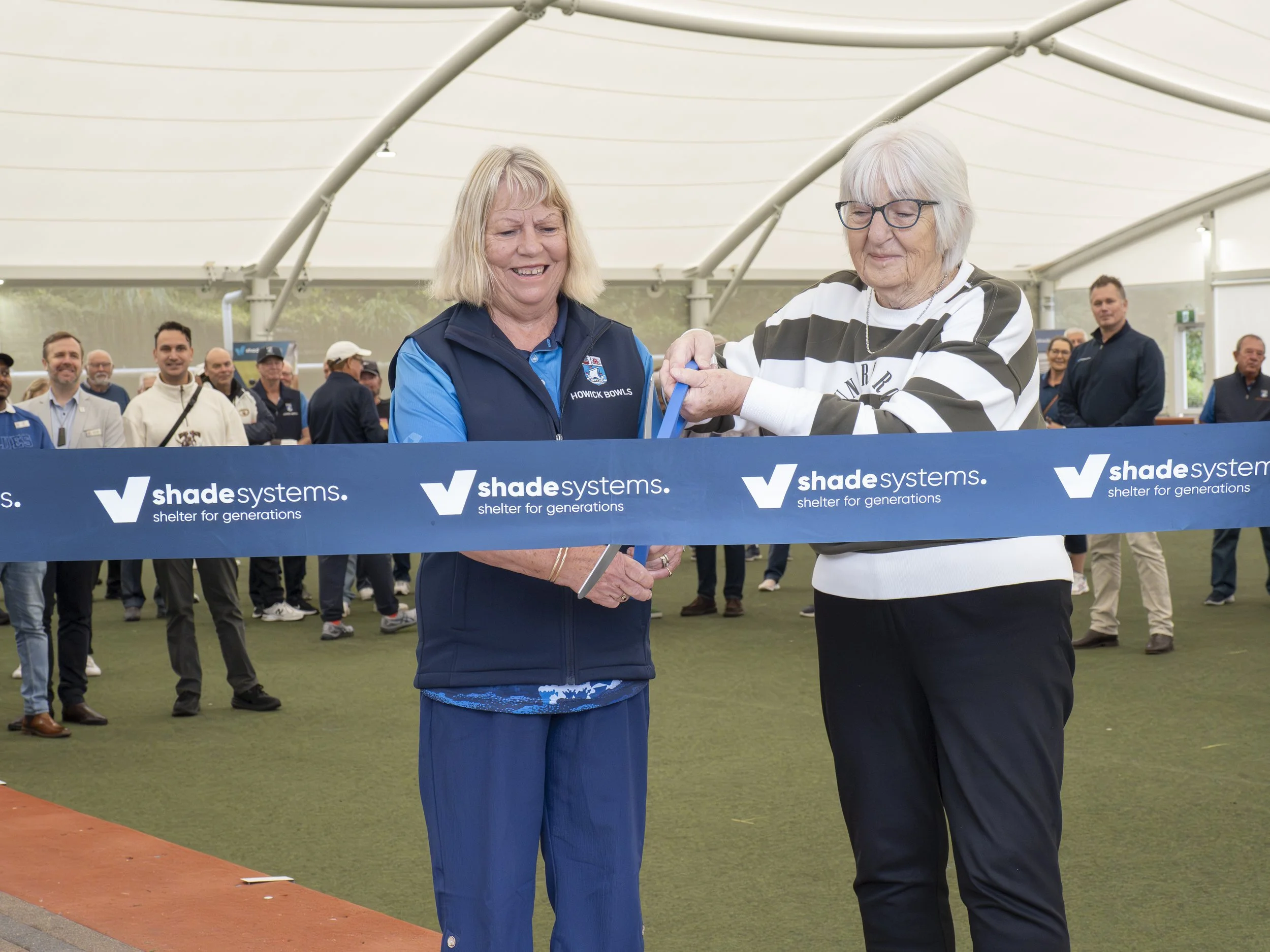
Past presidents of Howick Bowling Club, Noeline Sadgrove and Lyn McKay, cut the ribbon to officially open the covered green. Photos supplied Howick Photographic Society Margaret Jones Sue Townsend
There was a sense of irony when Howick Bowling Club held its official opening for the super structure canopy now covering one of its greens, enabling play in all weather.
For it rained heavily last Saturday morning, the very reason why it’s been constructed, and every one present to celebrate a grand construction job done very well were bone dry and smiling.
It’s been a major building project undertaken by the club, and the volunteers who guided its creation can stand back and proudly say they did that.
President Brian Jago described it a “special day in the long history of the Howick Bowling Club”.
“This day marks the culmination of eight years of hard work, setbacks and frustration.
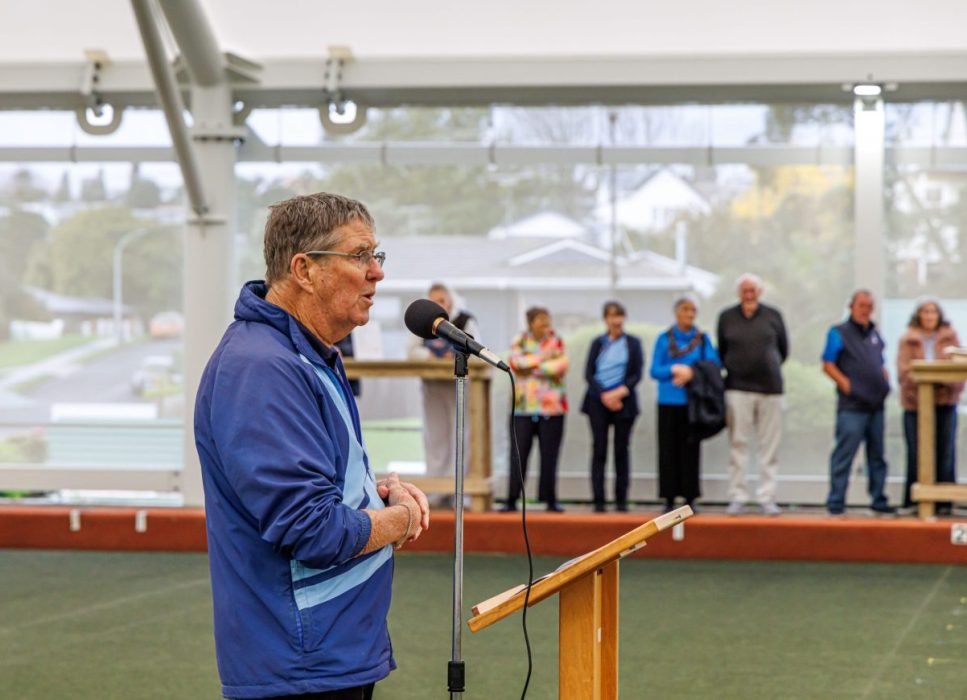
President Brian Jago described it a “special day in the long history of the Howick Bowling Club”.
“We’ve persisted and the completed project is testimony to dedication of club members and unwavering support from our principal sponsors, for which we’re extremely grateful.
“Those of us who are members of this bowling club owe a huge debt to those who came before us and built the facilities and reputation of this club.
“Now it’s our turn to pass on to the next generation of bowlers facilities that will allow the club membership to prosper and expand into the future.”
Jago called on past presidents of Howick Bowling Club, Lyn McKay and Noeline Sadgrove, “who had a very active part in the planning of this facility to cut the ribbon to officially open our covered green”.
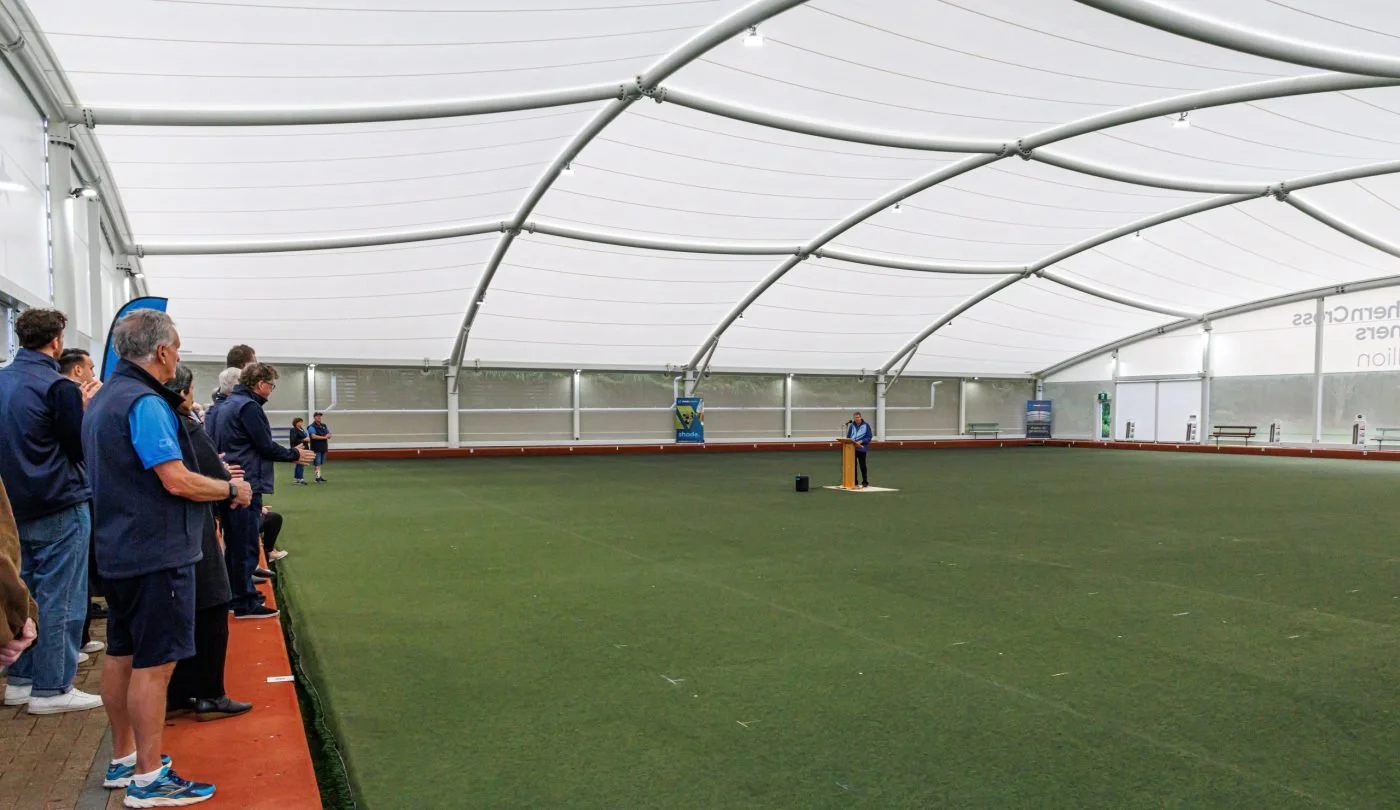
Jago said: “A big vote of thanks also to all those club members who took time to revitalise the interior of this facility, including painting, cleaning and the building of the bar leaners.”
Jago said the club “has been fortunate to have the financial support of Bowls Auckland, through its Rawhiti Fund, Auckland Council, and the Howick Local Board”.
“Without the encouragement of these organisations, we would not have had the courage to contemplate the building of this facility.
“We’re also thankful to have received donations from NZ Community Trust, Four Winds Foundation, Grassroots Trust, Bobby Foundation, and Chenery Memorial Trust.
“Ten members of our club have contributed by way of individual loans, and special mention to Ken and Cecily McIntyre, for their generous donation to the construction fund. Thank you one and all.
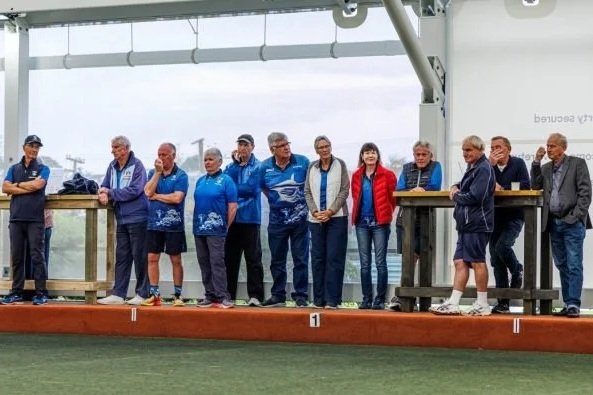
Some of the club members in attendance, with volunteer project leader Rod Sadgrove, fourth right.
“To Shade Systems, the constructors, our thanks for your skill and persistence to ensure the project proceeded on a timely and cost-effective basis,” Jago said.
“Our project manager, Rod Sadgrove, has put in vast amounts of volunteer time into this project. It’s due to his knowledge, skill and enthusiasm we are here. Thanks Rod.
“Thanks also to your team who supported you and the club, using their knowledge and experience in project management,” said Jago.
“A big vote of thanks also to all those club members who took time to revitalise the interior of this facility, including painting, cleaning and the building of the bar leaners.”
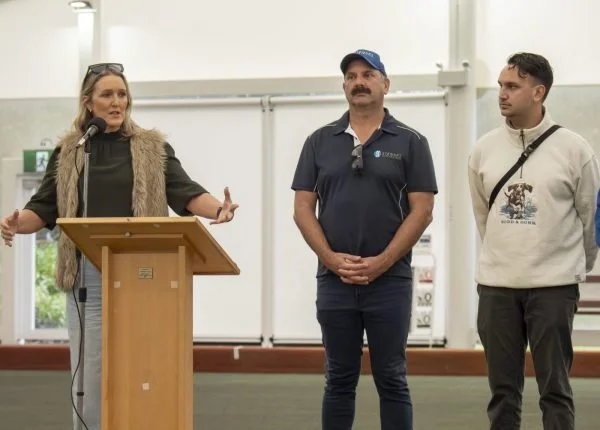
Howick ward councillor Bo Burns said: “To make these projects work, you need community collaboration.” With Duncan Stewart of Stewart Surveyors and Jack Collins of the Howick Local Board.
Respected clubman Sadgrove, in his low-key modest way with subtle grin, made a brief proud speech after Jago, thanking everyone involved including his dedicated volunteer project team.
Howick ward councillor Bo Burns, who is actively involved with the club, spoke on behalf of the council and Howick Local Board, praising the outcome of an “interesting journey”, saying “local business support is key”.
“To make these projects work, you need community collaboration.”
Barry Milward, of Southern Cross Partners, which has its name emblazoned on the attractively designed giant roof with see-through canvas sidings, said they’ve watched with great interest on its creation from their nearby Howick base.
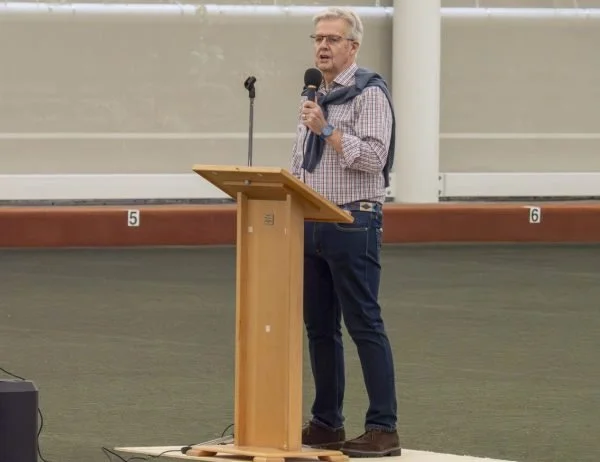
Barry Milward, of Southern Cross Partners, said its “thrilled” to be involved with Howick Bowling Club.
He said Southern Cross Partners is “thrilled” to work with Howick Bowling Club, “it’s lovely to help”, and “it’s a start – we want to continue to help”.
Adam Cherrie, of Shade Systems, said its structure, with 100 per cent UV-ray protection, is “going to make a huge difference to the club” and that the company is “absolutely thrilled” with what it has delivered.
Duncan Stewart, of Stewart Surveyors, which has been involved in the project, said despite all the building activity, the green pleasingly has held its required flat surface.
Once the official ceremony was complete, attendees retreated to the clubrooms for a celebratory shared lunch, to fuel up for the all-important bowls played under cover on Saturday afternoon.
Ed: After Saturday’s speeches, in conversation with Rod Sadgrove, I said Howick Bowling Club is one of the best sport clubs in Auckland. He leaned back a little and said “really?”
I said that for many reasons. From what I’ve observed down the years – and I’ve been around Auckland sports clubs for most of my 60 years and reported on a lot – Howick Bowling Club is blessed with a world-beating location and ample space, sturdy buildings and excellent car parking.
But its people make it, and they do things properly. Members are committed to its success and turn up. And they’re friendly about it.
What it has achieved in building the covered green is a magnificent accomplishment, and it has been delivered not only for the club but the east Auckland community. It’s a club-managed asset to be utilised and enjoyed by the public for many years ahead. – PJ
Howick ward councillors oppose 7.9 per cent rates increase

Howick ward councillors Bo Burns, left, and Maurice Williamson spoke against Auckland Council’s 7.9 per cent rates increase. File photos
Auckland Council’s Annual Plan 2026/2027 has been agreed at this week’s budget and performance committee meeting and formally approved by the council’s governing body.
That’s despite strong opposition from elected representatives including Howick ward councillors Maurice Williamson and Bo Burns.
The financial settings agreed ensure the target of returning to average residential rates increases of no more than 3.5 per cent per year over the medium term remains achievable, the council says.
The annual budget includes a 7.9 per cent rates increase, “keeping Auckland significantly below the double-digit hikes facing communities across the rest of New Zealand”.
It also includes funded operating, interest, and depreciation costs for the City Rail Link (CRL) public transport infrastructure project, equivalent to a 7.8 per cent rates increase; capital investment of $3.6 billion into transport, water and community infrastructure; and a non-negotiable $106 million operating savings target to keep pressure on the council organisation to deliver better value.
Mayor Wayne Brown says while the 2026/27 budget was always going to be the toughest hurdle for the region, sudden global shocks made holding the line incredibly challenging.
“Global fuel pressures, on top of existing financial challenges, added a massive $213 million risk to our budget.
“Without our $106 million savings plan, and before the added fuel pressure of $25m to $50m, that volatility could have forced a 15 per cent rates hike on Aucklanders.
“Instead of taking the easy way out and passing that straight onto ratepayers, we are choosing strict discipline and large operating savings.”
Brown says Auckland’s 7.9 per cent increase is a far cry from the double-digits crippling the rest of the country, who are working “business as usual”.
“This year isn’t business-as-usual for Auckland. We are funding the country’s biggest transport infrastructure project ever in the CRL.”
The council’s budget includes capital investment of $3.6 billion to fund transport and water infrastructure, community services and regional assets.
It focuses on critical transport renewals and bringing the CRL online, housing growth compliance, the ‘Making Space for Water’ flood programme, activating the Central Interceptor’s second half, and funding the physical spaces and assets Aucklanders interact with daily.
Brown says there’s “no time for political grandstanding”, addressing an amendment put forward by North Shore ward councillor John Gillon.
The amendment shows a misunderstanding of the current budget proposal, Brown says.
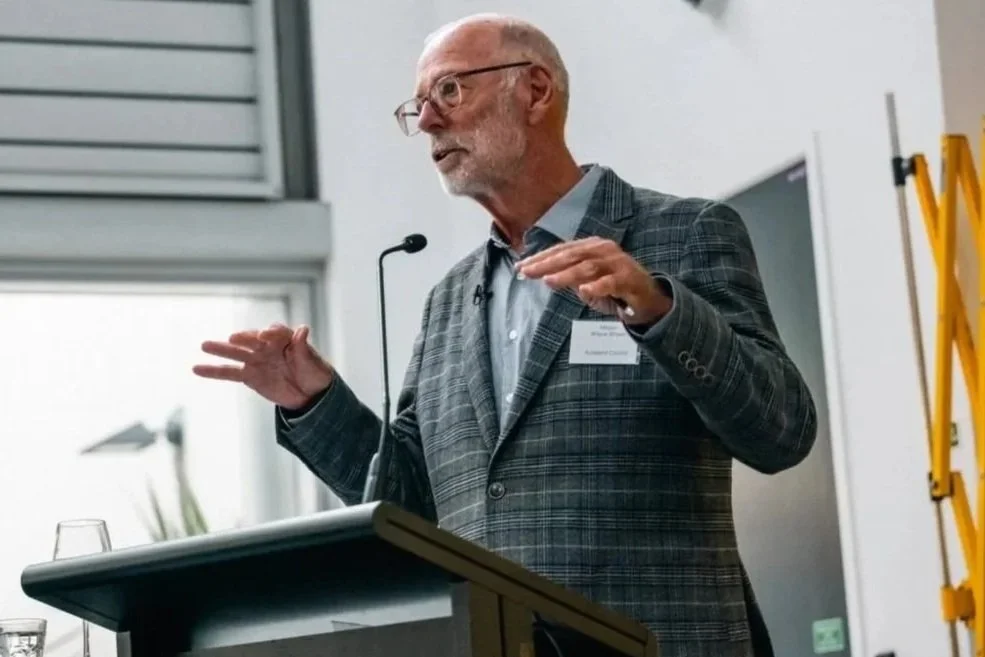
Auckland mayor Wayne Brown says the council is funding the country’s biggest transport infrastructure project ever in the City Rail Link. Photo supplied
“You can’t ‘defer’ a funding gap. There’s nothing to defer when it comes to major events funding and scrapping the food waste collections would cost in break fees.
“The amendment also includes finding a further $60 million in savings. That’s not only imaginary, it’s simply irresponsible.
“Our $106m annual savings target is the largest ever and is already larger than the rates revenues of 54 other councils.
“A $166 million in savings would set our chief executive up to fail.
“Further, calls to defer depreciation risk a downgrade of our credit rating.
“This would incur further costs to service debt and could wipe out all our savings.”
Williamson and Burns were among the councillors who argued, and voted, against the 7.9 per rates increase.
“Naturally I’m disappointed the vote did not go the way I, and many in our community, had hoped,” Burns says.
“I put my position forward clearly because I believed it was the right thing to do for the people I represent.
“This was never about politics or personalities. It was about listening to residents, standing up for common sense, and making sure the community’s voice was heard around the council table.
“While we missed out this time, I do not regret taking that stand. My job is not to sit quietly when I believe the people of Howick and east Auckland deserve better.
“My job is to speak up, ask the hard questions, and push for decisions that reflect the concerns of local families, ratepayers and businesses.
“I respect the democratic process, but I also believe the community has every right to feel disappointed when its views are not reflected in the final outcome.
“This is not the end of the matter for me. I will continue to advocate strongly, constructively and factually for the people who put their trust in me.
“We did not win the vote yesterday, but we made the community’s position clear, and I will keep fighting for that voice to be heard.”
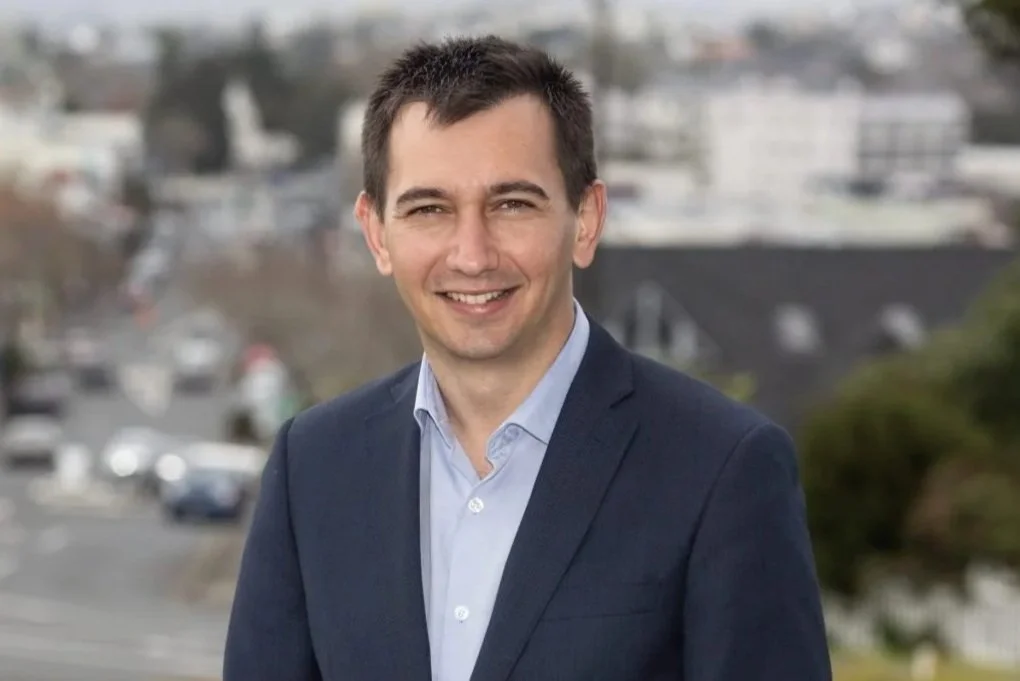
Pakuranga MP Simeon Brown says he’s disappointed to see mayor Wayne Brown and Auckland Council push through a “massive” rates increase of 7.9 per cent. Times file photo
Williamson says the council has let Aucklanders down. The council’s staffing levels were supposed to come down after the Super-City structure was created in 2010, but has instead grown as a percentage of the city’s population.
If the council’s staffing levels had not increased to the level it has, it would have been able to save about $100 million, and the rates increase could have come down to about 4.6 per cent, he says.
“That’s the first of the concerns I have. There are heaps of others and I raised them [on May 26].
“That one alone, you’ve got to somehow be able to convince me, why, when the merger of these [councils] occurred, all the work that went into them was to be enormous efficiency gains and staff costs, and we’ve seen the exact opposite.
“Any private company is always trying to trim the fat. I know it’s cold and harsh, but you just can’t just keep staff on for the sake of being an employment agency, if somebody else is having to pay their bill, and the ratepayers are having pay for it.”
Williamson suggested implementing a temporary fuel surtax of 10 per cent on public transport fares that would last while the Government’s fuel support package is in place.
“My view is if you put a 10 per cent extra on public transport fares, we could easily be getting another $30 million out of the cost and that would be another one per cent off the rates [increase].”
He also opposes all Auckland ratepayers having to pay the almost $80 fee for the council green food scraps bin, which he’s calculated is used by less than 30 per cent of homes in his neighbourhood.
Pakuranga MP Simeon Brown took to social media on May 27 to criticise the council’s governing body for voting to pass the 7.9 per cent rates increase.
“It is pretty disappointing to see Wayne Brown and Auckland Council push through a massive rates increase of 7.9 per cent this year, despite having options to deliver a lower increase,” he says.
“Wayne Brown and Auckland Council had options available to reduce the rates increase and lessen the impact on Aucklanders, but actively chose to ignore them.
“These options included cutting back-office expenditure, reducing wasteful spending on consultants and contractors, and getting rid of the green bin, which barely anyone uses yet costs Aucklanders around $100 per household each year.
“Just as central Government is looking to reduce costs in the back office, Wayne Brown and Auckland Council should have done the same.
“I want to applaud Howick ward councillors Bo Burns and Maurice Williamson for voting to reduce the rates increase, alongside the five other councillors who bravely voted against the mayor and in support of the humble ratepayer.
“National backs lower rates, and that is why we are introducing a rates cap to stop councils from using ratepayers like an ATM.”
Bo Burns is the owner of Times Media, the publisher of the Eastern Times