Grants in New Zealand: Where to Apply, What They Fund, and How to Give Your Application the Best Chance
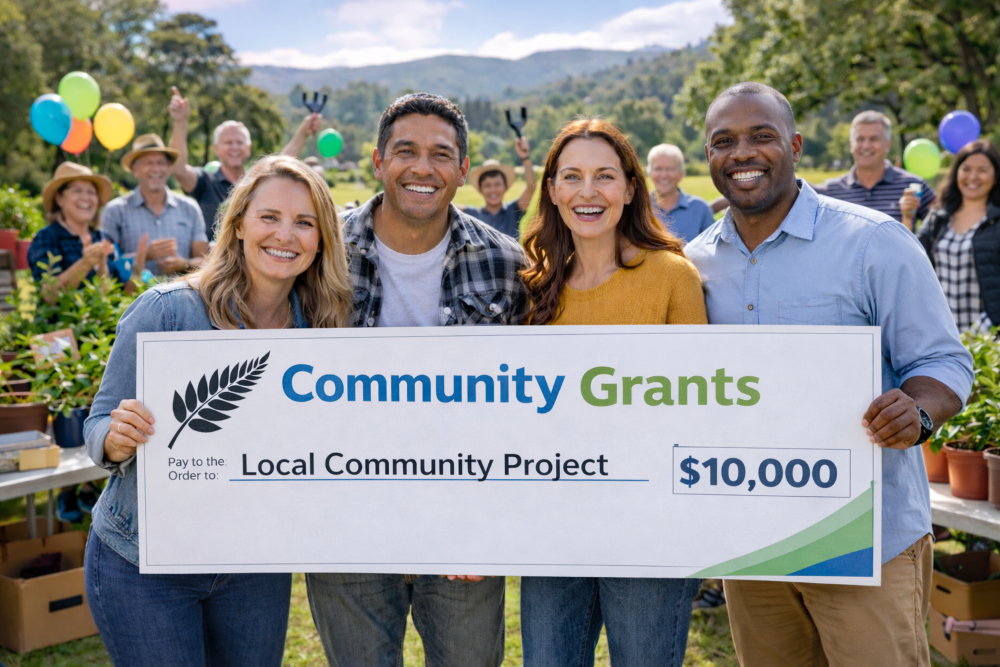
If you’re involved in a local club, school, charity, sports team, arts group, community project, or volunteer initiative, you’ll know one thing for sure: good people are doing great work… but funding is often the missing piece.
I get asked all the time, “Bo, where do we actually apply for grants?” and “Which ones are best for what we need?”
So, I’ve pulled together a helpful guide on where to apply, what each fund typically supports, and some best practice tips to make your application stand out.
The “Big Buckets” of Funding
Most grants fall into one of these categories:
✅ Community projects and wellbeing
Think: community gardens, equipment, safety upgrades, local improvement projects, services that help people.
✅ Sport and recreation
Think: uniforms, gear, travel, coaching, facilities, tournaments.
✅ Arts and culture
Think: events, workshops, materials, performances, local creative projects.
✅ Education and youth
Think: programmes, mentorship, resources, learning support, youth development initiatives.
✅ Environment and sustainability
Think: restoration work, waste minimisation, education programmes, community initiatives.
The Best Places to Apply for Grants
Below are some of the most common and useful funding options across NZ. I’ve added what they’re usually best for so you can apply strategically.
Grassroots Trust
Great for: community groups, schools, not-for-profits, equipment, projects, and local initiatives.
Apply here: https://www.grassrootstrust.co.nz/apply-for-a-grant/
Eligibility info: https://www.grassrootstrust.co.nz/apply-for-a-grant/grant-decision-criteria/
Transpower Community Care Fund
Great for: community projects with lasting benefits in certain locations, and up to $15,000.
Note: They don’t fund events, salaries, rent, or operational costs.
Main info: https://www.transpower.co.nz/communitycare-fund
(They often run Expressions of Interest in April and October.)
Lottery Grants (Lotto NZ)
Great for: capability, capacity building, and community projects.
How to apply: https://mylotto.co.nz/lottery-grants
Lottery Grants Board overview: https://www.communitymatters.govt.nz/lottery-grants-board
Helpful note: informal groups can sometimes apply for grants under $10,000
NZCT Pokie Grants (New Zealand Community Trust)
Great for: community groups, schools, sports clubs, not-for-profits, equipment, uniforms, programmes and local initiatives funded through gaming (pokie) proceeds.
Apply here: https://www.nzct.org.nz/grants/
NZCT overview: funding is generally returned to the areas where the funds are raised, so it’s best to apply if there are NZCT venues operating in your community.
Eligibility info: https://www.nzct.org.nz/grants/our-grants-criteria/
Foundation North
Great for: bigger community funding in Auckland and Northland, including quick response grants and larger community grants.
Apply here: https://www.foundationnorth.org.nz/apply-for-funding
Grant types and timeframes: https://www.foundationnorth.org.nz/application-guide/applying-for-a-grant
Auckland Council Community Grants (Local Boards)
Great for: local community projects, events, programmes, equipment, and initiatives that benefit your neighbourhood. These grants are run through Auckland’s Local Boards and are a great option for schools, charities, clubs, and community groups.
Apply here: https://aucklandcouncil.smartygrants.com.au/
Support info: The site includes applicant help guides and you can contact a funding advisor if needed
Trusts and Funders to Know (Great to Research and Match to Your Cause)
These are common grant sources many NZ groups use, depending on what you’re doing:
NZCT (New Zealand Community Trust)
The Lion Foundation
Rotary Foundation
The Tindall Foundation
Todd Foundation
JR McKenzie Trust
Hugh Green Foundation
Next Foundation
Public Trust
Perpetual Guardian
Len Reynolds Trust
Wayne Francis Charitable Trust
DV Bryant Trust Board
Working Together More Fund
Sport New Zealand
You’ll also see many community groups using fundraising platforms like:
Givealittle
PledgeMe
These are great when you want your community to chip in and you can actively promote it online.
What Grants Usually Cover (and what they often won’t)
Most funders love supporting:
✅ Equipment and resources
✅ Community programmes and services
✅ Facility improvements
✅ Projects with a clear community benefit
✅ Targeted initiatives with a defined outcome
Many funders will not fund:
❌ “Business as usual” operating costs
❌ Salaries and admin (some do, but many don’t)
❌ Projects already completed
❌ Costs without quotes or clear budgets
❌ Vague ideas with no clear plan
Transpower is a good example, they clearly state they won’t fund events, salaries, admin, rent, volunteer support, training, equipment hire and similar operational costs.
Best Practice Tips to Increase Your Chances of Approval
Here are the habits I see in successful grant applications.
1. Apply early (do not leave it to the last minute)
Early applications allow time for clarification, extra documents, and fixing missing details before it’s declined for being incomplete.
2. Match the funder to the purpose
Don’t try force a project into a fund that isn’t aligned.
Find the funder that naturally fits what you’re doing.
3. Make it crystal clear what you need
Be specific:
What are you buying or delivering?
How many people benefit?
What changes in the community because of it?
4. Use simple numbers and clean budgets
The best applications are easy to understand:
Total project cost
Amount requested
What you’re contributing
Quotes included
Timeline for delivery
5. Show impact, not just need
Instead of “we really need this”, explain:
what it will improve
who it supports
what problem it solves
what success looks like
6. Keep documents up to date
Common requirements include:
bank account proof
legal structure or charity registration
financial statements
committee list
two quotes
invoice details
If these are old or inconsistent, it slows everything down.
7. Make it easy for them to say yes
A great application reads like:
✅ clear
✅ planned
✅ reasonable
✅ community focused
✅ achievable
✅ measurable
My “Grant Checklist” Before You Hit Submit
Before submitting, double check:
✅ The funder is the right match
✅ Every question is answered
✅ Attachments are included
✅ Your budget totals match
✅ Quotes are recent and clear
✅ Your timeline makes sense
✅ You’ve explained who benefits and how
✅ You’ve included the “why now” urgency
If You’re Not Sure Where to Start
If you’re a club or group and you’re overwhelmed, start here:
Make a list of exactly what you need (equipment, facility, programme, uniforms, etc)
Pick 3 grant providers that match that purpose
Prepare your “core documents pack” once so you can reuse it
Apply consistently throughout the year
Grant funding is one of those things that gets easier the more systems you put around it.
Final Note
Local groups are the heartbeat of our community. The sports clubs, schools, volunteer organisations, arts programmes, and charities are doing the real work on the ground every day.
If you’re one of those people putting your hand up to lead, organise, coach, or build something better, I see you and I appreciate you.
If you found this helpful, feel free to share it with your club committee, PTA, coaches, or community group chat.
Let’s keep supporting the people who support our community. 💛
Bo